


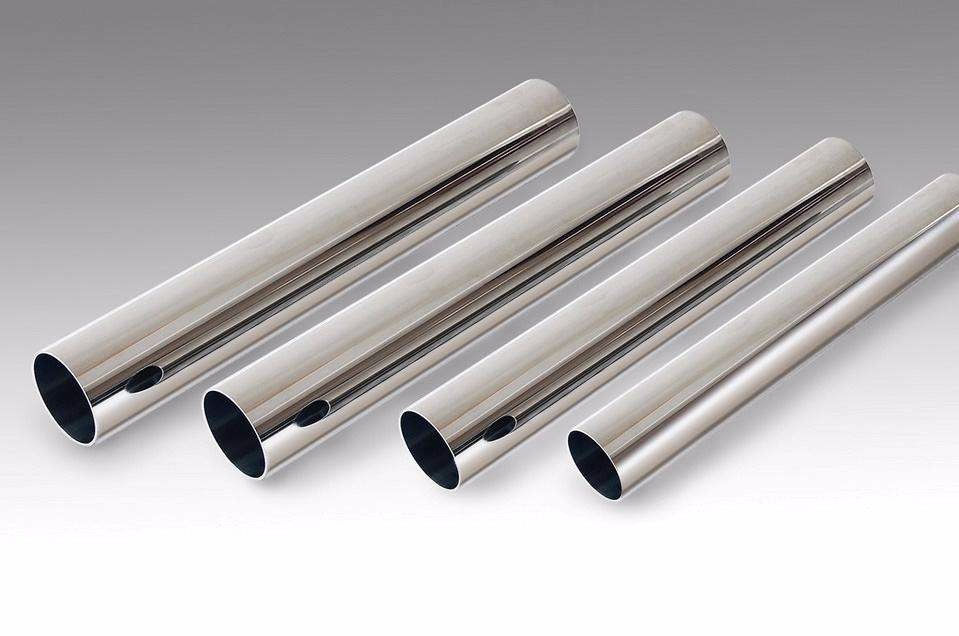
Stainless steel is the abbreviation of stainless steel, resistant to air, steam, water and other weak corrosive media or stainless steel; The steel that is resistant to chemical corrosion media (acid, alkali, salt and other chemical etching) is called acid-resistant steel.
Stainless steel refers to the steel that is resistant to weak corrosive media such as air, steam, water and chemical etching media such as acid, alkali, salt, also known as stainless acid-resistant steel. In practical applications, the steel that is resistant to the corrosion of weak corrosive media is often called stainless steel, and the steel that is resistant to the corrosion of chemical media is called acid-resistant steel. Due to the difference in the chemical composition of the two, the former is not necessarily resistant to chemical medium corrosion, while the latter is generally stainless. The corrosion resistance of stainless steel depends on the alloying elements contained in the steel.
Common classification
Metallographic organization
Generally, according to the metallographic organization, the ordinary stainless steel is divided into three categories: Austenitic stainless steel, ferritic stainless steel and martensitic stainless steel. On the basis of these three basic metallographic structures, for specific needs and purposes, and derived from the duplex steel, precipitation hardening stainless steel and iron content of less than 50% of the high alloy steel.
1.Austenitic stainless steel
The matrix is mainly stainless steel with a face-centered cubic crystal structure of austenitic structure (CY phase), non-magnetic, mainly through cold working to strengthen it (and may result in a certain magnetic). The American Iron and Steel Institute is designated with 200 and 300 series numbers, such as 304 (Liquid-O-Ring 304EU).
2.Ferrous stainless steel
The matrix is dominated by ferrite structure (phase a) of body-centered cubic crystal structure, magnetic, generally can not be hardened by heat treatment, but cold working can make it slightly strengthened stainless steel. The American Iron and Steel Institute is marked 430 and 446.
3.Martensitic stainless steel
The matrix is martensitic structure (body-centered cubic or cubic), magnetic stainless steel, its mechanical properties can be adjusted by heat treatment. The American Iron and Steel Institute uses the numbers 410, 420, and 440. Martensite has an austenitic structure at high temperatures, and when cooled to room temperature at an appropriate rate, the austenitic structure is able to convert to martensite (i.e., hardened).
4.Austenitic ferritic (duplex) stainless steel
The matrix has both austenitic and ferritic two-phase structure, of which the content of the less phase matrix is generally greater than 15%, is magnetic, and can be strengthened by cold working stainless steel, 329 is a typical duplex stainless steel. Compared with austenitic stainless steel, duplex steel has higher strength, higher resistance to intergranular corrosion, chloride stress corrosion and point corrosion.
5.Precipitation hardening stainless steel
Stainless steel whose matrix is austenitic or martensitic and can be hardened by precipitation hardening. The American Iron and Steel Institute uses 600 series numbers, such as 630, which is 17-4PH.
In general, in addition to alloys, the corrosion resistance of austenitic stainless steel is relatively excellent, in a less corrosive environment, ferritic stainless steel can be used, in a mildly corrosive environment, if the material is required to have high strength or high hardness, martensitic stainless steel and precipitation hardened stainless steel can be used.
Thickness differentiation
1.Because the steel mill machinery in the rolling process, the roll heat appears slight deformation, resulting in the thickness of the rolled out board deviation, generally thick in the middle and thin on both sides. When measuring the thickness of the board, the state stipulates that the middle part of the board head should be measured.
2.The cause of tolerances is generally divided into large tolerances and small tolerances according to market and customer demand.
What kind of stainless steel is not easy to rust?
There are three main factors affecting stainless steel corrosion:
1.Content of alloying elements. Generally speaking, the content of chromium in 10.5% steel is not easy to rust. The higher the content of chromium nickel, the better the corrosion resistance, such as 304 material nickel content in 8%~10%, chromium content reached 18%~20%, such stainless steel in general circumstances will not rust.
2.The smelting process of the production enterprise will also affect the corrosion resistance of stainless steel. Large stainless steel plants with good smelting technology, advanced equipment and advanced technology can be guaranteed whether in the control of alloying elements, the removal of impurities, and the control of billet cooling temperature, so the product quality is stable and reliable, the internal quality is good, and it is not easy to rust. On the contrary, some small steel mills are backward in equipment and technology, and impurities cannot be removed in the smelting process, and the products produced will inevitably rust.
3.External environment. The climate is dry and ventilated environment is not easy to rust, and the air humidity is large, continuous rainy weather, or the environment area with high pH in the air is easy to rust. 304 stainless steel, if the surrounding environment is too poor will rust.
Stainless steel appears rust spot how to deal with?
1.Chemical methods
Use pickling paste or spray to assist the rust area to re-passivate to form chromium oxide film to restore its corrosion resistance (Liquid-O-Ring) ability, after pickling, in order to remove all contaminants and acid residues, it is very important to properly rinse with water. After all treatment, re-polish with polishing equipment, and seal with polishing wax. For local slight rust spots can also be used 1:1 gasoline, oil mixture with a clean cloth to wipe rust spots.
2.Mechanical methods
Sand blasting, blasting, obliterating, brushing and polishing with glass or ceramic particles. With mechanical methods it is possible to erase contamination caused by previously removed, polished or annihilated materials. All kinds of pollution, especially foreign iron particles, can be a source of corrosion, especially in humid environments. Therefore, the mechanical cleaning surface should preferably be cleaned under dry conditions. The use of mechanical methods can only clean the surface, can not change the corrosion resistance of the material itself. Therefore, it is recommended to re-polish with polishing equipment after mechanical cleaning and seal with polishing wax.
Instrument commonly used stainless steel grade and performance
1.304 Stainless steel. It is one of the most widely used austenitic stainless steel, suitable for manufacturing deep drawing parts and acid pipelines, containers, structural parts, all kinds of instrument bodies, etc., and can also manufacture non-magnetic, low-temperature equipment and components.
2.304L stainless steel. In order to solve the serious intergranular corrosion tendency of 304 stainless steel caused by Cr23C6 precipitation under some conditions, the sensitized state of the ultra-low carbon austenitic stainless steel has significantly better intergranular corrosion resistance than 304 stainless steel. In addition to the slightly lower strength, the other properties are the same as 321 stainless steel, mainly used for corrosion resistant equipment and components that need to be welded and cannot be treated with solid solution, and can be used to manufacture various types of instrument bodies.
3.304H stainless steel. The internal branch of 304 stainless steel has a carbon mass fraction of 0.04%~0.10%, and the high temperature performance is better than 304 stainless steel.
4.316 Stainless steel. The addition of molybdenum on the basis of 10Cr18Ni12 steel makes the steel have good resistance to reducing medium and point corrosion. In seawater and other media, corrosion resistance is better than 304 stainless steel, mainly used for pitting resistance materials.
5.316L stainless steel. Ultra-low carbon steel, with good resistance to sensitized intergranular corrosion, suitable for the manufacture of welded parts and equipment with thick cross-section sizes, such as corrosion resistant materials in petrochemical equipment.
6.316H stainless steel. 316 stainless steel internal branch, carbon mass fraction of 0.04%-0.10%, high temperature performance is better than 316 stainless steel.
7.317 Stainless steel. Pitting and creep resistance is better than 316L stainless steel, used in the manufacture of petrochemical and organic acid corrosion resistant equipment.
8.321 Stainless steel. Titanium stabilized austenitic stainless steel, adding titanium to improve intergranular corrosion resistance, and has good high temperature mechanical properties, can be replaced by ultra-low carbon austenitic stainless steel. It is not recommended in general except for special occasions such as high temperature or hydrogen corrosion resistance.
9.347 Stainless steel. Niobium stabilized austenitic stainless steel, adding niobium to improve intergranular corrosion resistance, corrosion resistance in acid, alkali, salt and other corrosive media with 321 stainless steel, good welding performance, can be used as corrosion resistant materials can be used as heat resistant steel, mainly used in thermal power, petrochemical fields, such as the production of containers, pipelines, heat exchangers, shafts, furnace tubes in industrial furnaces and furnace tube thermometers.
10.904L stainless steel. Super complete austenitic stainless steel, is a kind of super austenitic stainless steel invented by Otto Kunpu Company of Finland, its nickel mass fraction is 24%~26%, carbon mass fraction is less than 0.02%, excellent corrosion resistance, in non-oxidizing acids such as sulfuric acid, acetic acid, formic acid, phosphoric acid has good corrosion resistance, and has good crevice corrosion resistance and stress corrosion resistance. It is suitable for sulfuric acid of various concentrations below 70℃, and has good corrosion resistance to acetic acid and mixed acid of formic acid and acetic acid at any concentration and temperature under normal pressure. The original standard ASMESB-625 classified it as a nickel-based alloy, and the new standard classified it as stainless steel. China only similar grade 015Cr19Ni26Mo5Cu2 steel, a few European instrument manufacturers of the key material is 904L stainless steel, such as E+H mass flow meter measurement tube is 904L stainless steel, Rolex watch case also uses 904L stainless steel.
11.440C stainless steel. Martensitic stainless steel, the highest hardness in the hardenable stainless steel, stainless steel, hardness is HRC57. Mainly used for making nozzles, bearings (PM600), valve spool, seat, sleeve, stem and so on.
12.17-4PH stainless steel. Martensitic precipitation-hardened stainless steel, HRC44, with high strength, hardness and corrosion resistance, cannot be used at temperatures higher than 300 ° C. It has good corrosion resistance to atmosphere and dilute acid or salt, and its corrosion resistance is the same as 304 stainless steel and 430 stainless steel, used in the manufacture of offshore platforms (Liquid-O-Ring 757), turbine blades, valve spool, seat, sleeve and valve stem.
In the instrument professional, combined with versatility and cost problems, the conventional austenitic stainless steel selection sequence is 304-304L-316-316L-317-321-347-904L stainless steel, of which 317 is less used, 321 is not recommended, 347 is used for high temperature corrosion resistance, 904L is only the default material for some components of individual manufacturers. The 904L is generally not actively selected in the design.
In the design and selection of the instrument, there will usually be occasions when the instrument material is different from the pipe material, especially in high temperature conditions, special attention should be paid to whether the choice of the instrument material meets the design temperature and design pressure of the process equipment or pipeline, such as the pipeline is high temperature chromium molybdenum steel, and the instrument chooses stainless steel, then there is likely to be a problem, you must go to the temperature and pressure meter of the relevant material.
In the instrument design and selection, often encounter a variety of different systems, series, grades of stainless steel, selection should be based on the specific process media, temperature, pressure, stress components, corrosion and cost and other aspects of consideration. (2024-04-08)
