

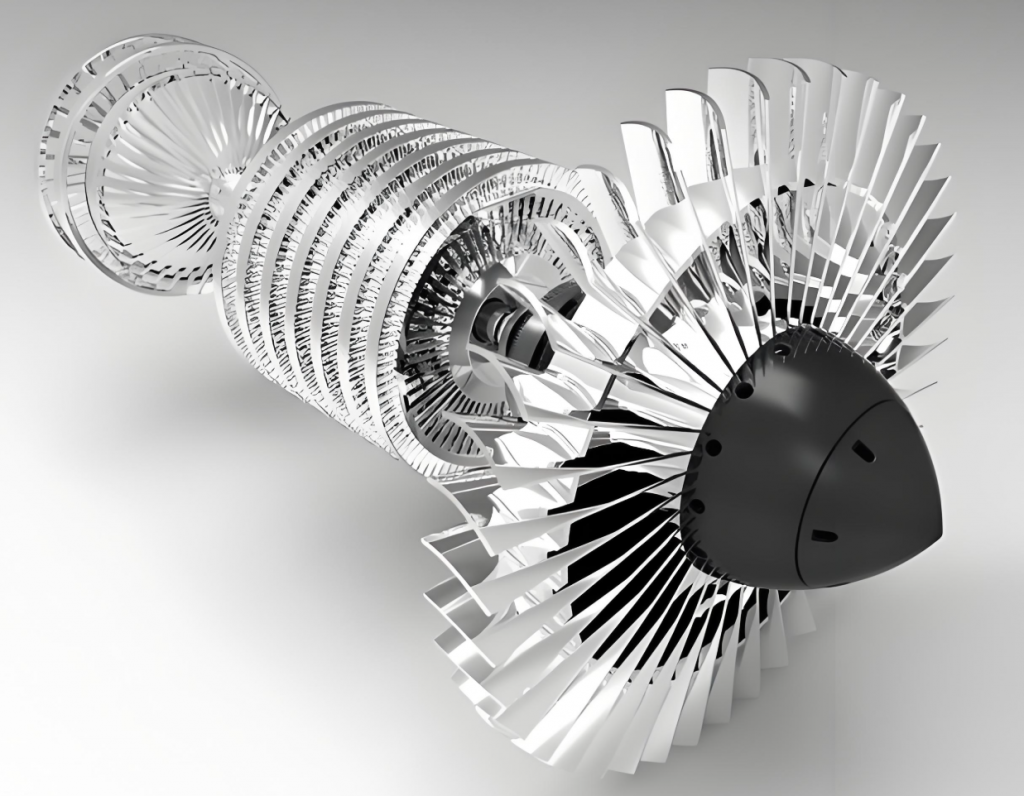
3D printing (3DP), also known as Additive Manufacturing Technologies (AM), is a technology that builds solid parts by adding materials layer by layer based on 3D CAD data.
The historical development of 3D printing technology is a process of continuous progress and expansion. From the early rapid prototyping technology to today’s wide application, 3D printing technology has been applied in the design and manufacturing fields such as jewelry design, footwear design and manufacturing, industrial design, architectural design, engineering design and construction, automotive design and manufacturing, as well as aerospace, dentistry and other medical fields.
On January 14, 2019, the University of California San Diego used rapid 3D printing technology for the first time to create a spinal cord scaffold that mimics the structure of the central nervous system, successfully helping rats recover motor function.
On May 5, 2020, China’s first successful flight of the Long March 5B carrier rocket was equipped with a “3D printer”. This is China’s first space 3D printing experiment, and the first time in the world to carry out 3D printing experiments of continuous fiber reinforced composite materials in space.
The types of 3D printing consumables are very rich, mainly including the following categories :
PLA (polylactic acid) : PLA is an environmentally friendly plastic made from biomaterials such as cornstarch or sugar cane. It is easy to print, has a mild smell, is harmless to humans, and is biodegradable, suitable for the production of everyday items such as food containers and toys. However, PLA has poor heat resistance, deformation at temperatures above 60 degrees Celsius, and is not resistant to water or chemical corrosion .
ABS (acrylonitrile-butadiene-styrene copolymer) : ABS is a tough, non-toxic plastic commonly used in toys such as Lego bricks. Its high melting point, printing parts with high strength and wear resistance, waterproof and chemical corrosion resistance, suitable for mechanical parts and automotive parts and other fields. However, ABS can produce unpleasant odors during printing and is not suitable for long-term outdoor use .
Metal materials : Metal materials such as stainless steel, aluminum alloy, titanium alloy, etc., are widely used in 3D printing, especially in the fields of aerospace, automobile manufacturing and medical devices. Stainless steel and aluminum alloys are widely used for their excellent corrosion resistance and strength. Metal 3D printing is more expensive and slower, but can accurately print complex shaped parts with high reliability and durability .
Bioprinting materials : Bioprinting materials include hydroxyapatite, collagen, bioceramics, etc., which are used to accurately simulate the structure of human tissues and organs. These materials are of great importance in medical research and treatment, enabling the printing of biologically active bone and cartilage tissue .
Special materials : such as PETG (polyethylene terephthalate 1, 4-cyclohexane dimethyl ester), TPU (thermoplastic polyurethane elastomer), PC (polycarbonate), PET (polyethylene terephthalate) and so on. PETG is transparent and strong impact resistance, TPU has good elasticity and softness, PC is heat resistant and strong impact resistance, PET is used for beverage bottles and so on. These materials have their own characteristics and are suitable for different application scenarios . (2025-01-14)